Application Tracking System (ATS)
Designed and built ATS workflow automation from Screening to Offer, integrated ATS with HRMS, and implemented AI CV-to-JSON extraction in a single upload flow with atomic data consistency.
Designed and built the ATS workflow automation from Screening to Offer, the ATS-to-HRMS integration, and the AI CV-to-JSON upload flow.
Recruiters needed one system to move candidates from screening to offer without re-entering candidate data between the ATS and the HRMS.
- Manual CV handling slowed recruiters down and produced inconsistent candidate records
- Recruitment stages needed clear backend state transitions from Screening to Offer
- Candidate data had to stay aligned between ATS workflows and downstream HRMS records
Key Decisions
What I chose, and what I traded for it
- 1
Keep upload, AI parsing, and candidate creation in one atomic flow
Rather than: A looser pipeline that could leave partially created records
Parsing and persistence succeed or fail together, so recruiters never see half-created candidates.
- 2
Extract CVs into schema-driven structured JSON
Rather than: Free-form AI output
Downstream mapping stays predictable and recruiter-facing data is safer to review, at the cost of tighter validation.
- 3
Model stage transitions explicitly and opinionatedly
Rather than: Fully flexible stage movement
Less flexibility, but recruitment stages stay auditable and the workflow rules stay clear.
- Turned CV uploads into structured candidate data, removing duplicate manual entry
- Bulk CV upload rates each candidate against the job automatically
- Recruitment workflows and HRMS integration points stay consistent
Design Artifacts
Diagrams behind the work
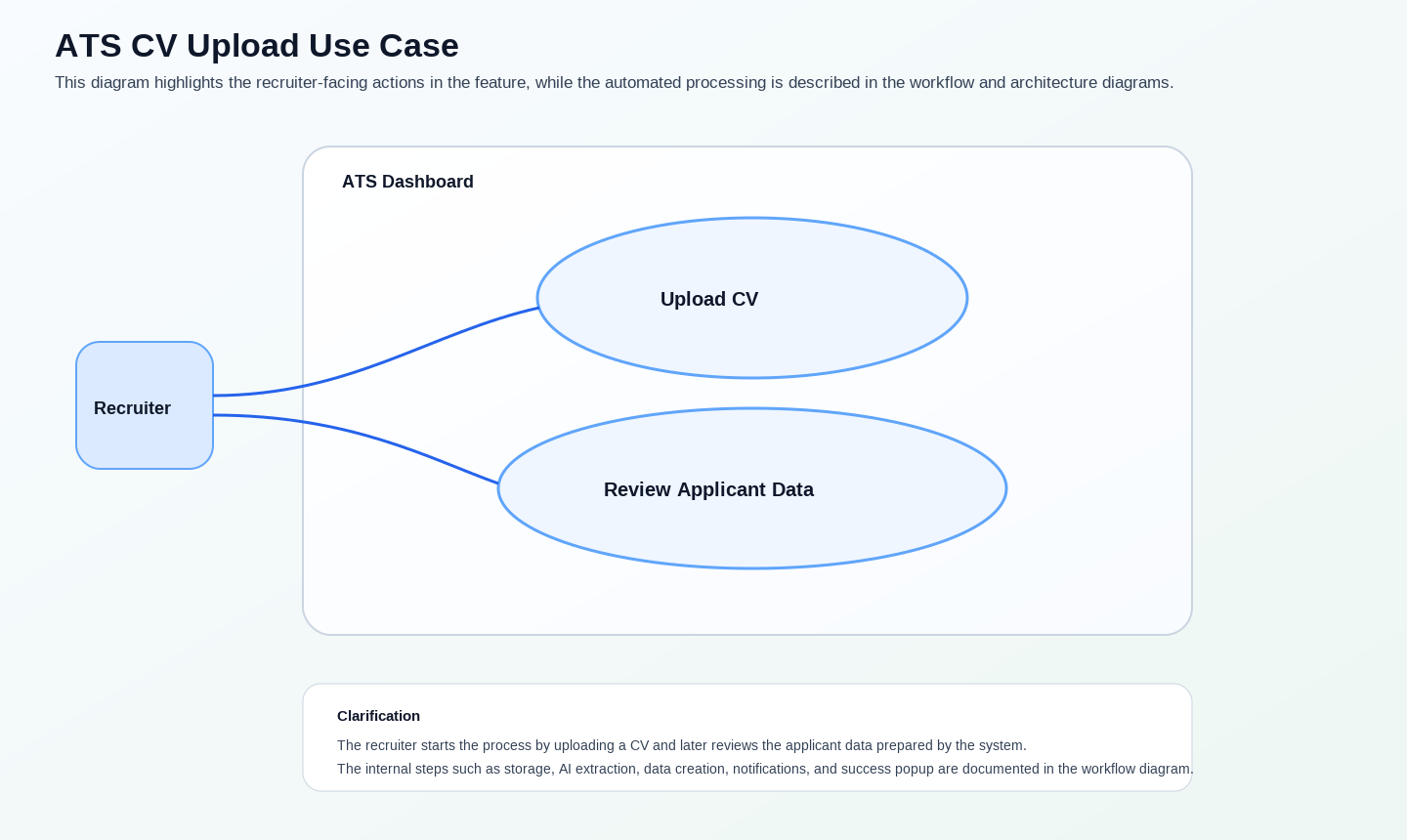
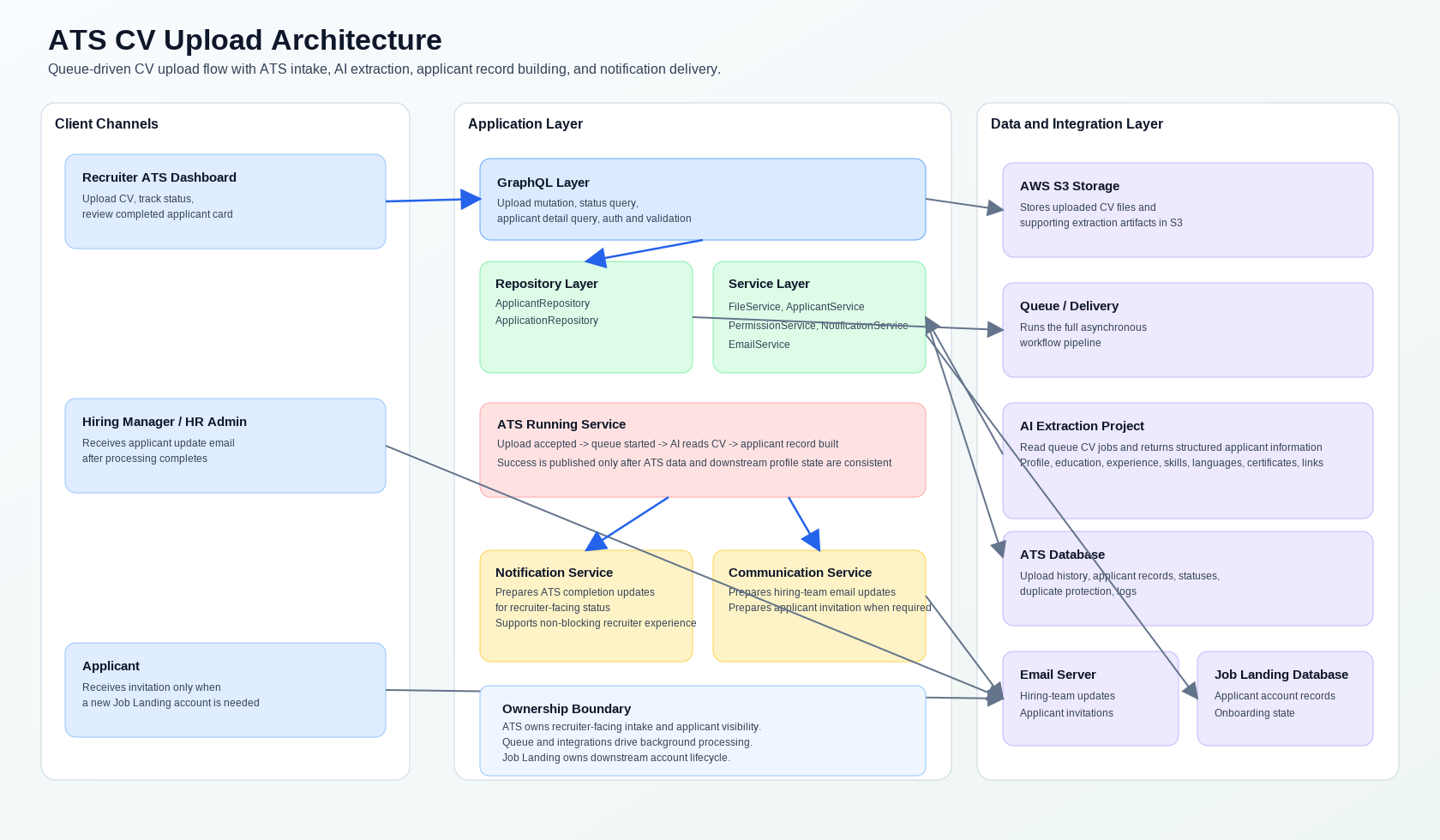
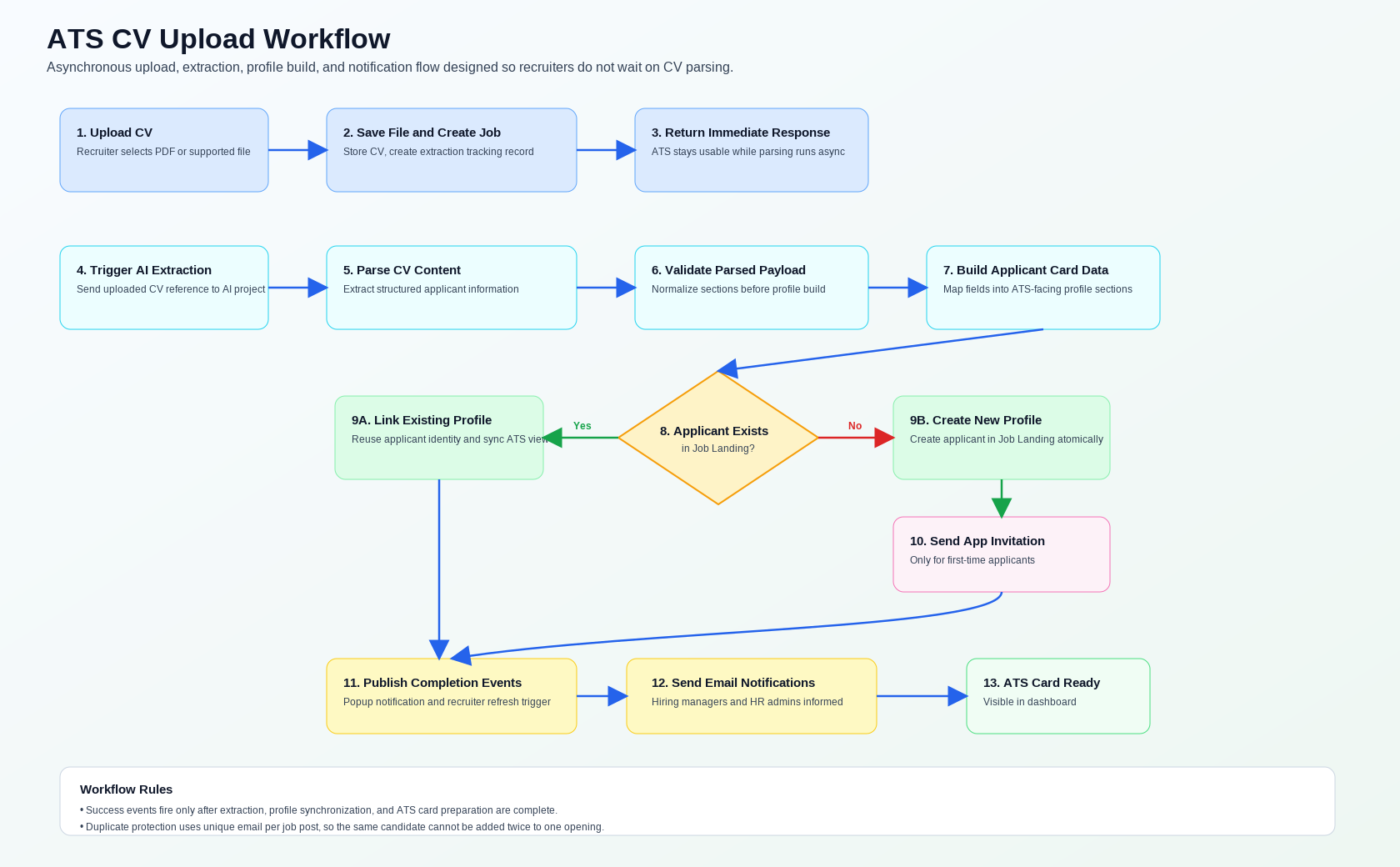
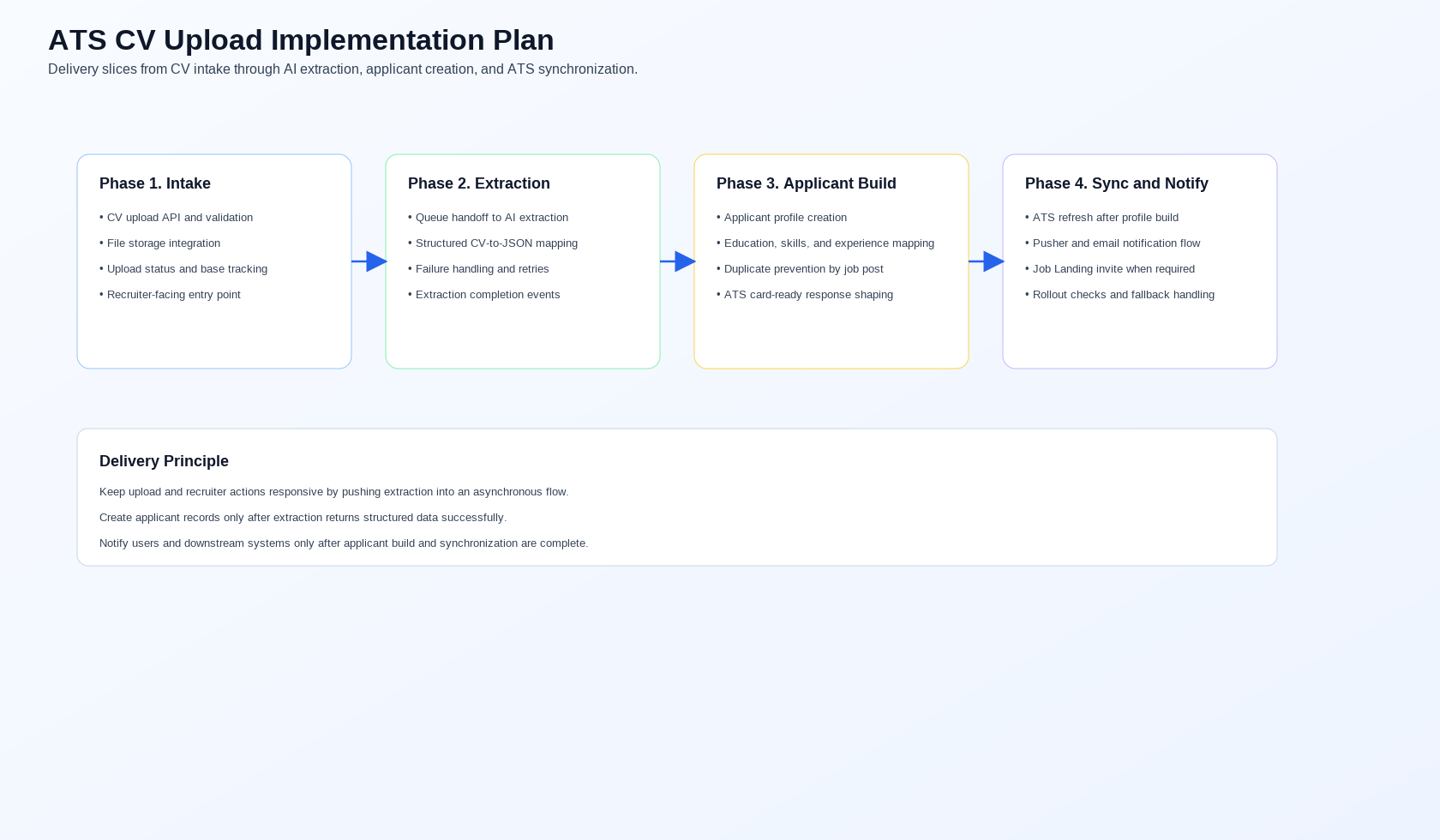
Deep Dive
Detailed breakdown
Recruitment operations needed one reliable system to move candidates from screening to offer while avoiding duplicate data entry between ATS and HRMS.
- Manual CV handling slowed down recruiter workflows and created inconsistent candidate records
- Recruitment stages needed clearer backend state transitions from Screening to Offer
- Candidate data had to stay aligned between ATS workflows and downstream HRMS records
Built an ATS flow that combined workflow automation, HRMS integration, and AI CV-PDF extraction so recruiters could upload once and continue the hiring process from structured candidate data.
- Implemented end-to-end recruitment stages with explicit progression through the hiring lifecycle
- Converted uploaded CV PDFs into structured JSON for candidate creation and downstream processing
- Integrated ATS records with HRMS so hiring data could move into broader people operations
Made backend decisions that favored consistency, controlled workflow states, and integration safety over a looser but riskier pipeline.
- Kept the upload-to-candidate creation flow atomic to avoid partial records across parsing and persistence
- Used structured JSON extraction instead of free-form AI output to make downstream mapping predictable
- Modeled workflow transitions explicitly so recruitment stages stayed auditable and easier to maintain
Accepted some implementation complexity in exchange for stronger data integrity and operational reliability.
- Atomic orchestration added backend complexity but reduced inconsistent candidate states
- Schema-driven extraction required tighter validation but made recruiter-facing data safer to review
- Opinionated stage transitions reduced flexibility but kept workflow rules clearer for the product
The result was a more production-ready hiring flow that reduced repetitive recruiter work and connected ATS operations more cleanly with the rest of the HR platform.
- Reduced duplicate manual entry by turning CV uploads into structured candidate data
- Improved operational consistency between recruitment workflows and HRMS integration points
- Strengthened reliability for a high-value business process that spans automation, AI parsing, and platform integration